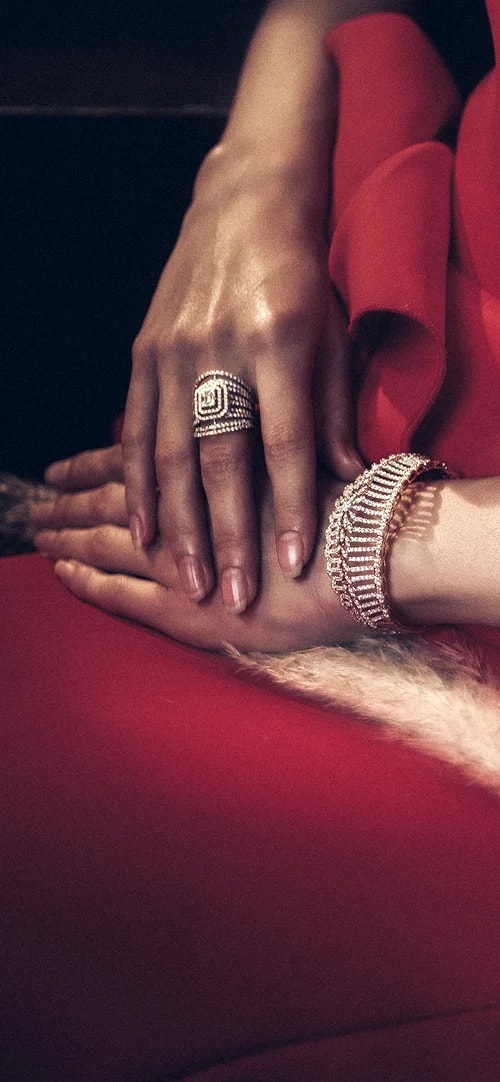


Round, oval, emerald, pear and the rest — how each shape handles light, how it wears, and which suits which hand.
Shape is the most visible choice you make, and the only one anyone will comment on. It also affects price, apparent size and how carefully a stone needs to be worn.
Round brilliant
The round brilliant is engineered specifically to return light, and it does so better than any other shape. It is also the most in demand and the most wasteful to cut from rough, which makes it the most expensive per carat. If maximum sparkle is the priority, this is the answer.
Elongated shapes
Oval, marquise and pear cuts spread their weight across a longer outline, so they look larger than a round stone of the same carat and lengthen the finger. Their trade-off is the bow-tie: a dark band across the centre that appears when proportions are off. It is easy to see in person and easy to miss in a photograph.
Step cuts
Emerald and Asscher cuts use long parallel facets rather than many small ones, producing broad flashes of light instead of fine sparkle. The effect is architectural and understated — and unforgiving, since fewer facets means inclusions and lower colour grades show more readily.
Practical differences
- Pointed shapes — pear, marquise, princess — need protective settings at the tips.
- Elongated cuts look bigger per carat; step cuts often look smaller.
- Cushion cuts soften the outline and hide slight colour warmth well.
- Every shape but round benefits from being seen in person before buying.
We keep a range of shapes in the showroom for exactly this reason. Ten minutes comparing them on a hand settles the question more reliably than any guide, including this one.
Have a question about your next piece? We're always happy to talk it through.
Get in Touch